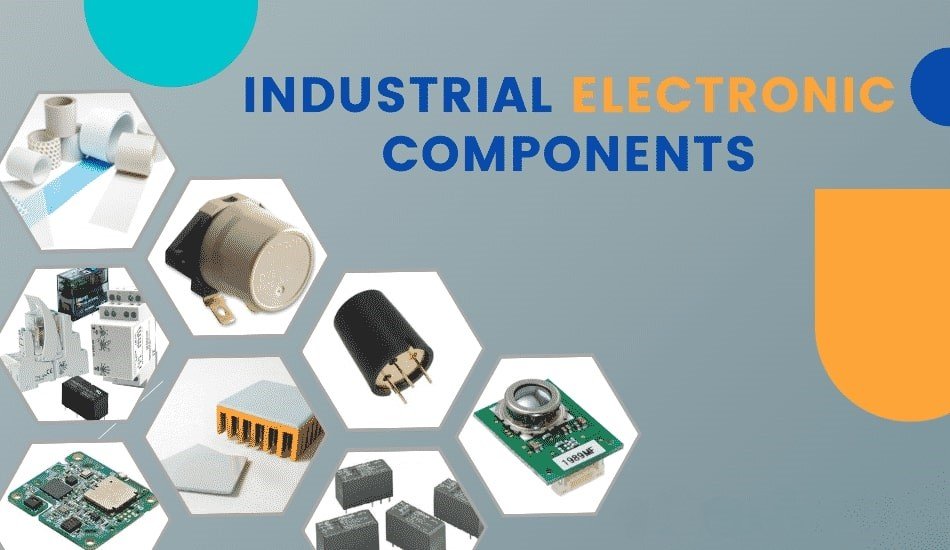
Industrial electronics rely on a variety of components that are designed to control, monitor, and optimize industrial processes. These components are selected for their durability, reliability, and performance under harsh conditions typical in industrial environments. Here are the primary components used in industrial electronics:
1. Sensors
Sensors are essential in industrial electronics for monitoring various physical parameters. They provide real-time data that can be used to control processes and maintain safety.
- Temperature Sensors: Measure temperature and are used in a wide range of applications, from manufacturing to power generation.
- Pressure Sensors: Monitor pressure levels in gases, liquids, or steam systems, critical in industries like oil and gas, chemical production, and HVAC.
- Flow Sensors: Measure the flow rate of liquids or gases in pipelines, ensuring consistent production and processing.
- Proximity Sensors: Detect the presence or absence of an object in automated systems, used in robotics and material handling.
- Humidity Sensors: Monitor moisture levels in environments like food processing or pharmaceuticals.
- Vibration Sensors: Detect mechanical vibrations in motors, pumps, and machinery, used for predictive maintenance.
2. Actuators
Actuators convert electrical signals into physical action to control mechanisms in industrial systems. They work alongside sensors to automate processes.
- Electric Motors: Used to drive machinery in applications like conveyors, pumps, and robotics. Common types include DC motors, AC motors, and stepper motors.
- Solenoids: Electromagnetic devices that create linear motion for valve control, locking mechanisms, and mechanical switches.
- Hydraulic and Pneumatic Actuators: Use fluid or air pressure to generate movement, typically in heavy-duty applications such as heavy machinery and industrial presses.
3. Power Supply Units (PSUs)
Power supplies are used to convert electrical energy into the appropriate form for the system’s needs.
- AC/DC Converters: Transform alternating current (AC) from the grid into direct current (DC) for electronic devices that require a stable power supply.
- DC-DC Converters: Adjust DC voltage levels within systems for efficient energy usage in industrial devices.
- Uninterruptible Power Supplies (UPS): Provide backup power during power outages to keep critical systems running, such as in control rooms, data centers, and medical facilities.
4. Transformers
Transformers are used to change the voltage level in power systems for efficient transmission and distribution.
- Step-Up Transformers: Increase voltage for long-distance transmission, reducing power loss.
- Step-Down Transformers: Reduce voltage to safer, usable levels for industrial equipment.
- Isolation Transformers: Provide electrical isolation between different parts of the system, protecting sensitive components and reducing noise.
5. Relays and Switches
Relays and switches are key in controlling circuits and automating industrial systems.
- Relays: Electrically operated switches that control the flow of power to various devices, often used in control panels and automation systems. They provide safety by isolating different parts of the system.
- Solid-State Relays (SSRs): Use semiconductor components to switch electrical signals without mechanical parts, providing faster and more reliable switching.
- Circuit Breakers: Protect electrical circuits from overcurrent by automatically disconnecting the power when excessive current is detected.
6. Programmable Logic Controllers (PLCs)
PLCs are specialized digital computers used to automate industrial processes.
- Input/Output (I/O) Modules: Interface between the PLC and field devices such as sensors, actuators, and switches.
- Central Processing Unit (CPU): Processes control instructions and logic for controlling industrial systems.
- Communication Modules: Allow PLCs to communicate with other systems and devices, including SCADA systems, remote I/O devices, and sensors.
7. Inverters and Variable Frequency Drives (VFDs)
These components control the speed and efficiency of motors and electrical devices.
- Inverters: Convert DC power to AC power, commonly used in renewable energy systems, HVAC, and industrial motor control.
- Variable Frequency Drives (VFDs): Regulate the speed of electric motors by varying the frequency of the supplied power, improving energy efficiency in motors used in pumps, fans, and compressors.
8. Capacitors and Inductors
Capacitors and inductors are passive components used for energy storage, filtering, and signal smoothing.
- Capacitors: Store electrical energy and are used in power factor correction, noise reduction, and smoothing voltage fluctuations.
- Inductors: Store energy in magnetic fields and are used in power supply systems, filters, and for inductive load management.
- Power Factor Correction Capacitors: Improve power factor by compensating for the reactive power in industrial systems.
9. Switchgear and Protection Devices
Switchgear and protection devices help control, protect, and isolate electrical equipment.
- Circuit Breakers: Automatically interrupt the flow of electricity in case of overload or short circuit.
- Fuses: Provide overcurrent protection by physically breaking the circuit when current exceeds safe levels.
- Surge Protectors: Protect equipment from voltage spikes and surges, typically caused by lightning or electrical faults.
10. Communication Modules and Interfaces
Communication modules enable data exchange between various devices in an industrial network.
- Modbus, Ethernet, and Profibus: Popular communication protocols used to connect industrial devices, PLCs, and SCADA systems.
- Wireless Communication Devices: Enable remote monitoring and control of equipment in hard-to-reach areas or large industrial facilities.
- Industrial IoT (IIoT) Gateways: Provide data connectivity for smart sensors, actuators, and other devices to be integrated into IoT systems.
11. Power Electronics
Power electronics manage the conversion and control of electrical power in industrial applications.
- Rectifiers: Convert AC to DC power for use in devices requiring a steady DC supply, such as in motor drives or battery charging systems.
- Thyristors and Triacs: Used for controlling high power in industrial equipment, such as motor speed control, heating elements, and lighting.
- Switching Regulators: Efficiently regulate power supply voltages, improving the energy efficiency of industrial systems.
12. Human-Machine Interfaces (HMIs)
HMIs are used to enable operators to interact with industrial systems.
- Touchscreen Displays: Provide an intuitive interface for monitoring and controlling industrial processes.
- Pushbuttons and Switches: Simple controls used for manual intervention in emergency situations or for adjusting parameters.
13. Signal Converters
Signal converters are used to translate signals between different types of measurement systems.
- Analog-to-Digital Converters (ADCs): Convert analog signals (e.g., temperature or pressure readings) into digital signals for processing in PLCs or other digital systems.
- Digital-to-Analog Converters (DACs): Convert digital signals back to analog signals for use in control systems or actuators.
14. Embedded Systems
Embedded systems are specialized computing systems integrated into industrial electronics.
- Microcontrollers and Microprocessors: Provide processing power for specific control tasks, such as in PLCs, sensors, or automation systems.
- Embedded Software: Control software that runs on embedded systems, enabling automation, monitoring, and control functions in industrial equipment.
15. Industrial Computers and Workstations
Used in industrial settings for process monitoring, control, and data analysis.
- Ruggedized Computers: Designed to operate in harsh industrial environments with features like high-temperature tolerance and resistance to vibration and dust.
- Edge Computing Devices: Perform data processing close to the source of data collection (i.e., at the edge), reducing latency and bandwidth requirements for real-time control and decision-making.
Conclusion
Industrial electronics rely on a wide array of components to perform functions such as power management, automation, monitoring, and safety in industrial environments. These components are designed to ensure that industrial processes are efficient, reliable, and safe, and are crucial in sectors ranging from manufacturing to power generation and renewable energy systems. The proper selection and integration of these components are essential for creating robust and effective industrial electronic systems.
Hashtags
#Semiconductors #PowerSemiconductors #IndustrialSemiconductors #SiliconChips #Transistors #Diodes #PowerTransistors #MOSFETs #IGBTs #SemiconductorDevices #Sensors #IndustrialSensors #TemperatureSensors #PressureSensors #ProximitySensors #MotionSensors #OpticalSensors #FlowSensors #VibrationSensors #LevelSensors #GasSensors #Actuators #IndustrialActuators #LinearActuators #RotaryActuators #ElectricActuators #HydraulicActuators #PneumaticActuators #ServoActuators #MechanicalActuators #SmartActuators #PowerActuators #Relays #IndustrialRelays #SolidStateRelays #ElectromechanicalRelays #RelaySwitches #ControlRelays #OverloadRelays #RelayModules #ThermalRelays #SwitchRelays #RelayControlSystems