The manufacturing of LED products has had a significant and multifaceted impact on the electronics industry. The rise of LED lighting technology has influenced several key areas of the industry, including innovation, supply chains, market dynamics, and the overall direction of technological development. Here are some of the key ways LED manufacturing impacts the electronics industry:
1. Advancements in Semiconductor Technology
- Integration of Semiconductors: LEDs are based on semiconductor technology, specifically Light Emitting Diodes, which are solid-state devices. The development and manufacturing of LEDs have led to further advancements in semiconductor materials, such as Gallium Nitride (GaN) and Silicon Carbide (SiC), which are essential for high-performance LEDs.
- Boosting Semiconductor R&D: The demand for brighter, more energy-efficient, and cost-effective LEDs has driven research in the semiconductor sector, resulting in innovations that have applications beyond lighting (e.g., power electronics, telecommunications, and electronics for renewable energy systems).
2. Drive for Energy Efficiency
- Sustainability in Electronics: LED manufacturing has propelled the electronics industry to prioritize energy-efficient components and products. Since LEDs are far more energy-efficient than traditional lighting sources (e.g., incandescent bulbs), they have helped shape broader industry trends toward low-power, eco-friendly electronics.
- Shift Toward Green Electronics: LED technology has contributed to the growing trend of “green electronics” — devices and components designed with a focus on energy conservation, reduced environmental impact, and longer product lifecycles. This shift has influenced other segments of the electronics industry, including consumer electronics, automotive, and industrial equipment, which increasingly incorporate energy-efficient features.
3. Impact on Manufacturing Techniques
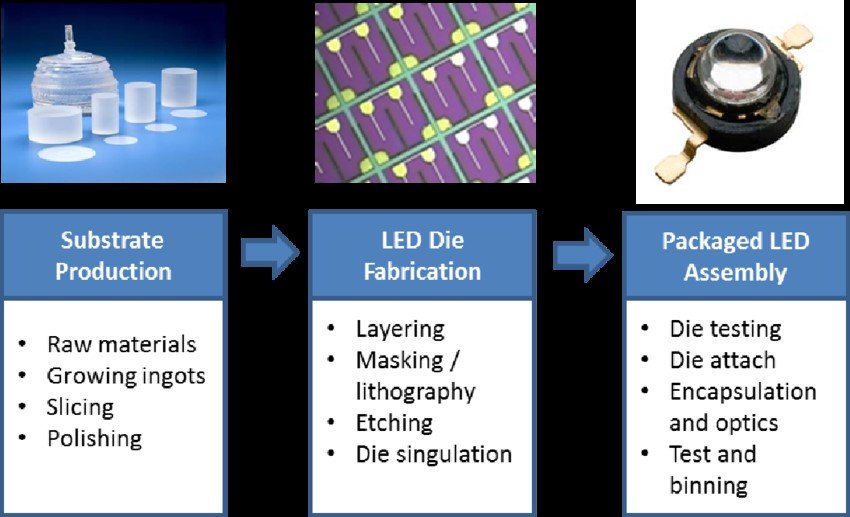
- Precision Manufacturing: The production of LED products requires high precision in materials handling, assembly, and testing, which has spurred innovations in manufacturing techniques, such as automated pick-and-place machines, robotic assembly lines, and advanced testing equipment.
- Advanced Materials Handling: The need for high-quality, defect-free materials has led to the development of improved techniques for handling and processing advanced materials, including semiconductor wafers and phosphor coatings, which are essential for producing high-performance LEDs.
4. Expansion of Lighting Solutions Market
- New Product Categories: The LED revolution has expanded the range of lighting products available in the market. New lighting solutions like flexible LED strips, smart bulbs, and energy-efficient streetlights have emerged, offering increased versatility and customization for both residential and commercial users.
- Growth of Smart Lighting: LED technology has enabled the rapid growth of smart lighting systems, which are increasingly integrated with IoT (Internet of Things) devices. These systems allow for remote control, automation, and energy monitoring, contributing to the larger trend of smart homes and smart cities. The need for innovative electronics to support these systems has led to a surge in demand for microcontrollers, sensors, and communication chips.
5. Competitive Pressures and Market Shifts
- Global Competition: The growth of the LED market has resulted in intensified competition within the electronics industry, as numerous companies vie to develop and supply the most cost-effective, efficient, and long-lasting LEDs. Companies like Philips, Osram, and Cree have become major players in the LED lighting space, while many other electronics companies have either entered the LED market or partnered with specialized firms to gain access to this technology.
- Price Reductions and Economies of Scale: As manufacturing processes have matured and scaled up, the cost of producing LEDs has steadily decreased. This price reduction has made LED technology accessible to a broader range of industries and consumers. At the same time, it has forced companies that manufacture traditional lighting sources (e.g., incandescent and halogen bulbs) to either adapt to LED technology or exit the market.
6. Impact on Supply Chains and Materials
- Supply Chain Evolution: LED manufacturing has influenced the supply chains for the electronics industry by driving demand for specific raw materials, such as rare earth metals, semiconductor materials (e.g., GaN, sapphire), and phosphors used in LED lighting. The electronics industry now faces an increased demand for these materials, which has reshaped supply chain dynamics and created new opportunities for suppliers and manufacturers.
- Component Integration: The development of integrated LED modules, where the light source, driver circuitry, and heat management system are combined into a single product, has spurred innovation in the integration of electronic components. This trend toward miniaturization and component integration has influenced other areas of electronics, such as mobile phones, laptops, and automotive systems.
7. Development of Smart and Connected Electronics
- Smart Electronics Integration: LEDs are now commonly integrated into various types of consumer electronics and appliances, such as smart TVs, refrigerators, and even wearable devices. As LED technology becomes an integral part of many modern devices, it has created opportunities for more seamless integration of lighting with other electronics, including smart sensors, controllers, and displays.
- IoT and Smart Cities: The integration of LEDs with the Internet of Things (IoT) has driven the creation of smart city infrastructure, such as street lighting systems that can adjust to environmental factors and monitor energy usage. These innovations in smart lighting have also accelerated demand for microelectronics, including sensors, wireless communication technologies, and embedded systems.
8. Impact on LED Display Technology
- Growth of LED Displays: LED technology is crucial to modern display systems, including television screens, digital signage, and smartphones. The demand for larger, higher-resolution, and more energy-efficient displays has resulted in the growth of OLED (Organic LED) and MicroLED technologies, which provide even better picture quality and energy efficiency. This has influenced the entire display manufacturing process and led to advancements in materials, precision manufacturing, and consumer electronics.
- New Applications for Displays: LED displays are now being used in a wide variety of applications, including automotive dashboards, augmented reality (AR) systems, and wearables. This growth in display technology has expanded the scope of the electronics industry, pushing manufacturers to develop new solutions for integrating LED technology into diverse products.
9. Advancements in Heat Management and Thermal Solutions
- Thermal Management Innovations: LED products, particularly high-power LEDs used in commercial and industrial settings, require advanced thermal management solutions to prevent overheating. This has led to the development of new heat sinks, cooling technologies, and advanced materials, such as thermally conductive plastics and metal alloys, which have broader applications in the electronics industry, particularly in high-performance computing and automotive electronics.
10. Re-shaping Consumer Expectations
- Consumer Demand for Efficiency: As consumers increasingly demand energy-efficient and environmentally friendly products, the rise of LED lighting has shaped expectations across the electronics industry. Consumers now expect electronics products to be more energy-efficient, longer-lasting, and integrated with smart technologies. This shift in consumer preference has driven the development of other energy-efficient electronics, such as low-power processors, energy-saving home appliances, and more sustainable packaging.
Conclusion
The manufacturing of LED products has had a profound impact on the electronics industry, from advancing semiconductor technology and manufacturing processes to driving demand for energy-efficient products and components. LED lighting has led to the development of new applications, reshaped supply chains, and fueled the growth of smart, connected electronics. As demand for LEDs continues to rise, their influence will likely extend to even more areas of the electronics industry, driving further innovation and creating new opportunities for both manufacturers and consumers.
Hashtags
#LEDTechInnovation #LEDManufacturingAdvancements #NextGenLEDTech #LEDsInElectronics #TechnologyDrivenByLEDs #ElectronicsIndustryRevolution #CuttingEdgeLEDTechnology #LEDManufacturingInnovation #TechTransformationWithLEDs #AdvancedLightingSolutions #LEDMarketBoom #GrowingLEDIndustry #ElectronicsDrivenByLEDs #ExpandingLEDDemand #LEDProductsOnTheRise #ElectronicsIndustryShift #LEDLightingMarketGrowth #IncreasedLEDMarketDemand #LEDProductsBoostIndustry #LEDMarketExpansion #CostReductionWithLEDs #AffordableLEDManufacturing #CostEffectiveElectronics #LEDManufacturingCompetition #LowerProductionCostsWithLEDs #LEDManufacturingCostSavings #CompetitiveLEDMarket #AffordableElectronicsInnovation #EconomicalLEDTech #LEDProductionEfficiency