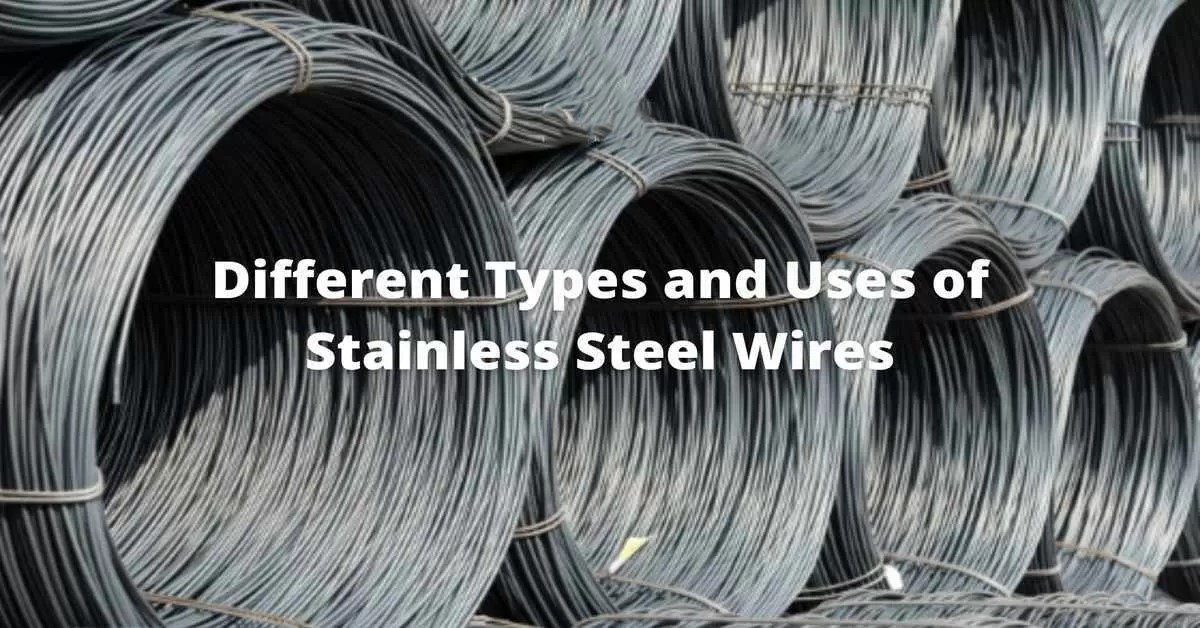
Stainless steel wires and cables are made from various grades of stainless steel, each tailored to specific applications based on properties such as corrosion resistance, tensile strength, and temperature tolerance. The most commonly used types of stainless steel for manufacturing wires and cables are:
1. Austenitic Stainless Steel
- Characteristics:
- High corrosion resistance.
- Good ductility and formability.
- Non-magnetic (in annealed condition) but may become slightly magnetic after cold working.
- Excellent performance in a wide range of temperatures.
- Common Grades:
- 304 (18-8 Stainless Steel):
- Contains 18% chromium and 8% nickel.
- Widely used for general-purpose wires and cables.
- Suitable for applications in mildly corrosive environments.
- 316:
- Enhanced corrosion resistance due to the addition of molybdenum (2-3%).
- Ideal for marine and highly corrosive environments.
- Common in applications like fishing nets, mooring lines, and medical devices.
- 304 (18-8 Stainless Steel):
2. Ferritic Stainless Steel
- Characteristics:
- Moderate corrosion resistance.
- Good resistance to stress corrosion cracking.
- Magnetic properties.
- Generally less expensive than austenitic grades.
- Common Grades:
- 430:
- Contains lower nickel content.
- Suitable for less demanding environments where moderate corrosion resistance suffices.
- Used in decorative and household applications.
- 430:
3. Martensitic Stainless Steel
- Characteristics:
- High tensile strength and hardness.
- Moderate corrosion resistance.
- Magnetic properties.
- Often used where strength and wear resistance are prioritized over corrosion resistance.
- Common Grades:
- 410:
- Contains 11.5-13.5% chromium.
- Used in applications requiring high strength and moderate corrosion resistance, such as springs and fasteners.
- 420:
- Higher hardness compared to 410 due to increased carbon content.
- Common in surgical instruments and cutting tools.
- 410:
4. Duplex Stainless Steel
- Characteristics:
- Combines the benefits of austenitic and ferritic stainless steels.
- High strength and excellent corrosion resistance, especially to chloride-induced stress corrosion cracking.
- Magnetic properties due to the ferritic phase.
- Common Grades:
- 2205:
- A widely used duplex grade with high resistance to pitting and crevice corrosion.
- Common in chemical and marine applications where both strength and corrosion resistance are required.
- 2205:
5. Precipitation-Hardened (PH) Stainless Steel
- Characteristics:
- High strength achieved through heat treatment.
- Excellent resistance to wear and fatigue.
- Moderate to good corrosion resistance.
- Common Grades:
- 17-4 PH (Type 630):
- Contains chromium, nickel, and copper.
- Used in applications requiring high strength and toughness, such as aerospace and offshore applications.
- 17-4 PH (Type 630):
Selection Criteria for Stainless Steel Grades
- Corrosion Resistance: Choose grades like 316 or 2205 for highly corrosive environments.
- Strength: Opt for martensitic or precipitation-hardened grades for applications requiring high tensile strength.
- Temperature Resistance: Use austenitic grades (like 304 or 316) for high-temperature applications.
- Cost Consideration: Ferritic grades like 430 are more economical for non-critical applications.
The choice of stainless steel type for wires and cables depends on the specific application requirements, such as environmental conditions, mechanical load, and cost constraints. Austenitic grades like 304 and 316 are the most widely used due to their versatility and corrosion resistance, while other grades are chosen for more specialized needs.