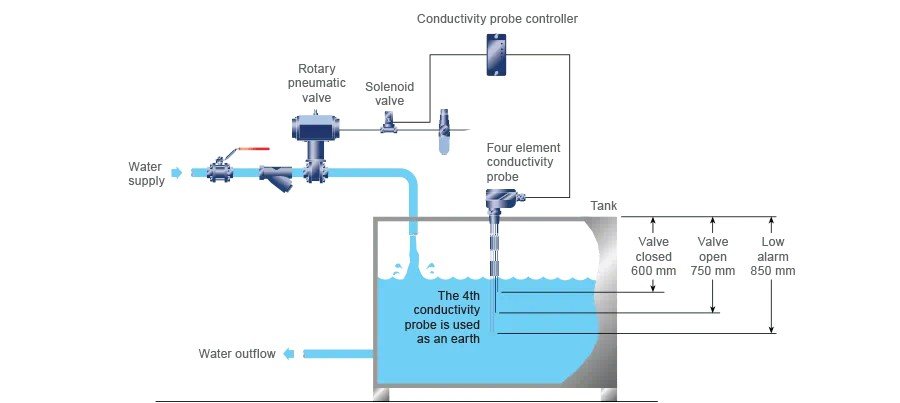
Electronic liquid level controllers help reduce operational costs in industries through the following ways:
1. Minimizing Wastage
- How: Precise monitoring and control prevent overflows, spillage, or dry-running of pumps, which can lead to material loss or equipment damage.
- Cost Impact: Reduces waste of resources like water, chemicals, or fuels.
2. Energy Efficiency
- How: They optimize pump and valve operations, ensuring motors run only when necessary and avoiding unnecessary energy consumption.
- Cost Impact: Lowers energy bills by reducing electricity usage.
3. Reduced Maintenance Costs
- How: Automated systems reduce wear and tear on pumps and valves by eliminating abrupt starts or stops and preventing equipment from operating in unsafe conditions.
- Cost Impact: Extends the lifespan of equipment and reduces the frequency of repairs or replacements.
4. Labor Savings
- How: By automating liquid level monitoring and control, industries can reduce the need for manual inspections and adjustments.
- Cost Impact: Saves on labor costs while improving efficiency and reliability.
5. Preventing Downtime
- How: Early warning systems and automated responses minimize the risk of equipment failure or process disruptions.
- Cost Impact: Ensures smooth operations, avoiding costly production delays.
6. Optimized Resource Usage
- How: Accurate level control avoids underutilization or overutilization of resources, such as water or chemicals in industrial processes.
- Cost Impact: Improves process efficiency and reduces procurement costs.
By integrating electronic liquid level controllers, industries can achieve significant savings while enhancing operational efficiency and sustainability.